First Communion Veil Traditions, Meaning and Etiquette
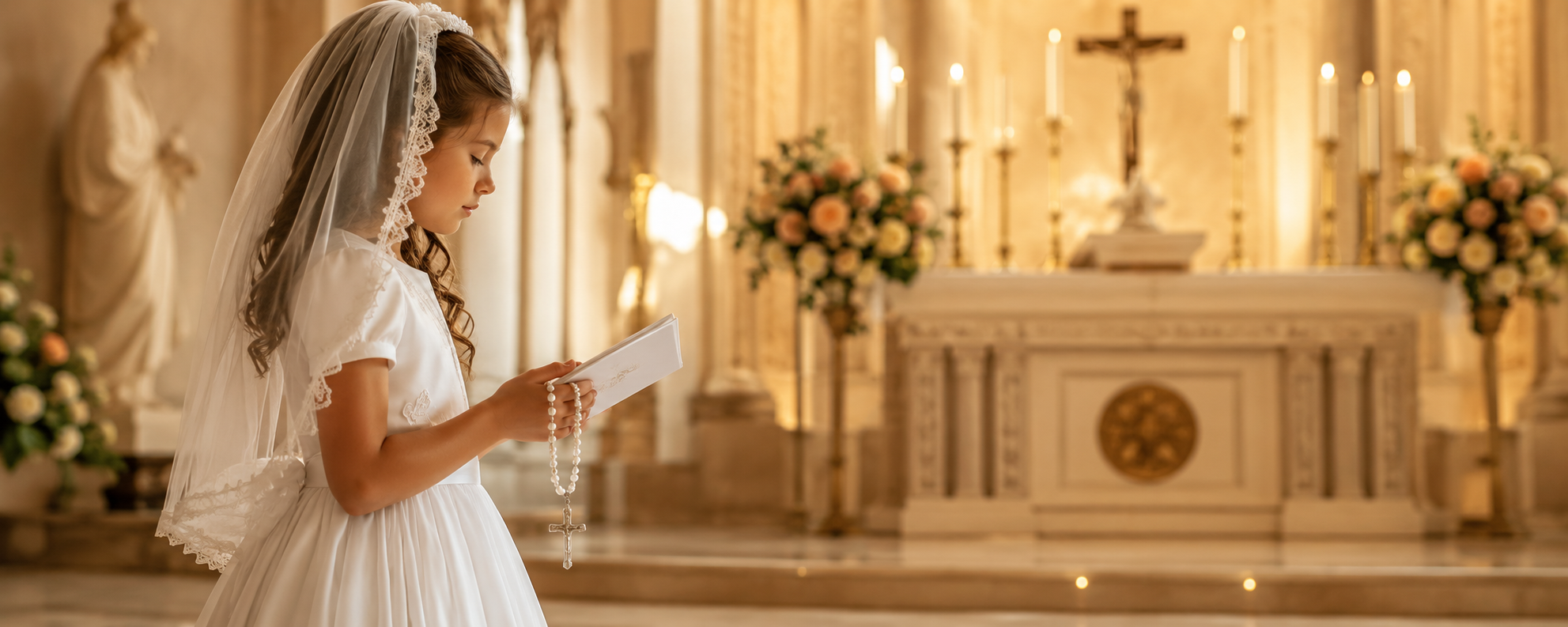
For many Catholic families, the First Communion veil is both a beautiful accessory and a visible sign that the day is sacred. Styles have changed across generations, but the veil continues to connect family tradition, reverence and joyful celebration.
Why Do Girls Wear Veils for First Communion?
The white dress and veil traditionally express purity, baptismal grace and reverence as a child receives the Eucharist for the first time. Families may also choose a veil because it is part of their parish custom or because mothers, grandmothers and sisters wore one for their own First Communion.
A veil is not universally required. Parish guidelines and local customs differ, and the sacrament itself is not made more meaningful by a particular accessory. The best approach is to follow the church’s directions and choose a style that helps the child feel comfortable and prepared.
Traditional and Modern First Communion Veils
Traditional styles often include soft white tulle, lace edging, floral wreaths and simple combs. Modern designs may add pearl clusters, subtle crystals, satin headbands, embroidered flowers or petite tiaras. Both can be appropriate when the look remains modest, age-appropriate and suitable for church.
Families interested in a classic look often choose floral wreath veils or lace-edged comb veils. Headband veils offer a comfortable contemporary option, while pearl and crystal accents add gentle light without overwhelming the dress.
First Communion Veil Etiquette
Ask about parish guidelines
Some parishes provide detailed clothing instructions, while others simply request white, modest attire. Confirm whether veils are optional, whether face-covering layers are discouraged and whether there are restrictions on length or elaborate headpieces.
Keep the child’s role central
The ceremony—not the outfit—is the focus of the day. Choose a veil she can wear without frequent adjustments. Avoid anything so heavy, tall or long that it distracts her during the procession, prayer or reception of Communion.
Practice before the ceremony
Have her walk, sit, stand and kneel while wearing the veil. Show her how to avoid leaning against it in the pew. If the parish uses candles, confirm the veil remains well away from the flame and follow all instructions from the catechist.
Should the Veil Cover the Face?
Most First Communion veils today are worn behind the head and do not cover the face. A blusher or face-covering layer is more closely associated with bridal veils and is generally unnecessary for children. If an heirloom veil includes one, ask the parish and consider securing it behind the head.
Can a Family Heirloom Veil Be Worn?
Yes, and it can add special meaning to the day. Inspect vintage tulle and lace carefully because age may make them fragile or yellowed. A professional cleaner or seamstress experienced with delicate fabrics can advise whether it is safe to wear or whether a small piece should be incorporated into a new veil.
When Is the Veil Put On and Removed?
Put the veil on after the dress, especially if the headpiece includes a comb or pins. Many families keep it on through Mass and formal photographs, then remove it for a meal or active celebration. Place it somewhere clean and dry rather than on a chair or table edge.
How to Care for a First Communion Veil
- Hang or lay it flat as soon as it arrives.
- Allow packing folds to relax naturally; use gentle steam only when the maker’s care instructions permit it.
- Keep hairspray and perfume away from tulle, pearls and crystals.
- Store it in acid-free tissue or a breathable garment box after the ceremony.
- Do not iron tulle directly.
Frequently Asked Questions
Are First Communion veils still worn?
Yes. They remain common in many Catholic parishes, though they may be optional. Local traditions vary.
Does every girl need the same veil?
No. Unless the parish specifies a uniform style, families can usually choose a veil that suits the dress, hairstyle and child’s comfort.
Can flowers be worn instead of a veil?
Some parishes permit a floral wreath or simple headpiece without tulle. Check the dress guidelines before deciding.
Is a tiara appropriate?
A petite, age-appropriate tiara can be suitable when parish rules allow it. Choose a restrained design that supports the reverent character of the occasion.
Honor the Tradition Beautifully
Explore classic and contemporary First Communion veils chosen for grace, comfort and a sacred family milestone.
Shop First Communion Veils